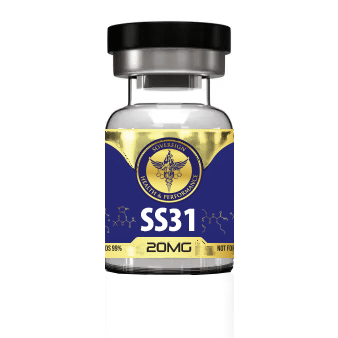
🔬 SS-31 (Elamipretide) — Research Overview
SS-31 (also known as elamipretide or MTP-131) is a synthetic aromatic–cationic tetrapeptide developed to selectively target mitochondria and stabilize mitochondrial membrane function.¹,² It was originally identified through screening programs designed to locate peptides capable of penetrating mitochondrial membranes and interacting with cardiolipin, a key phospholipid component of the inner mitochondrial membrane.¹
Unlike many bioactive peptides that function through receptor binding or systemic signaling pathways, SS-31 acts directly at the mitochondrial level. Experimental studies demonstrate that the peptide associates with cardiolipin and helps preserve mitochondrial cristae structure, improve electron transport chain efficiency, and reduce excess reactive oxygen species (ROS) generation under conditions of cellular stress.²–⁴
Because mitochondrial dysfunction is a central feature in numerous age-associated and degenerative conditions, SS-31 has been investigated across a wide range of experimental models including cardiovascular disease, skeletal muscle fatigue, neurodegeneration, and ischemia-reperfusion injury.³–⁶
Executive Summary
SS-31 is a mitochondria-targeting peptide that supports cellular energy efficiency by stabilizing inner mitochondrial membrane architecture.
Primary research findings demonstrate:
• Selective binding to cardiolipin in the mitochondrial inner membrane²
• Stabilization of electron transport chain supercomplexes³
• Reduction of mitochondrial ROS production during cellular stress⁴
• Improved mitochondrial respiration in multiple experimental models³,⁵
• Protection of mitochondrial structure during ischemia-reperfusion injury⁶
SS-31 does not function as a hormone or receptor agonist. Its activity is centered on mitochondrial bioenergetic stabilization and oxidative stress modulation.
Key Actions
Cardiolipin Binding and Membrane Stabilization
SS-31 selectively associates with cardiolipin, a phospholipid unique to the inner mitochondrial membrane, helping maintain cristae structure and electron transport chain organization.²,³
Electron Transport Chain Efficiency
Experimental models demonstrate improved electron flux through mitochondrial respiratory complexes, resulting in more efficient ATP production.³
Reduction of Mitochondrial ROS Production
By stabilizing cardiolipin and respiratory chain function, SS-31 reduces the excessive generation of reactive oxygen species that often accompanies mitochondrial dysfunction.⁴
Protection During Cellular Stress
SS-31 has demonstrated protective effects in models of ischemia-reperfusion injury and metabolic stress by preserving mitochondrial integrity and preventing permeability transition events.⁶
Skeletal Muscle Energetics
Studies in aged skeletal muscle demonstrate improved mitochondrial coupling and endurance-related metabolic efficiency.⁵
🧬 What Is SS-31?
SS-31 belongs to a class of mitochondria-targeting aromatic-cationic peptides identified by Szeto and colleagues during the development of compounds capable of penetrating mitochondrial membranes independent of membrane potential.¹
The peptide consists of four amino acids arranged to create both aromatic and positively charged regions, allowing it to selectively concentrate in the inner mitochondrial membrane and interact with cardiolipin.
Unlike antioxidants that broadly scavenge free radicals, SS-31 acts upstream by stabilizing the structural environment that governs mitochondrial respiration.²–⁴
Core Research Areas
❤️ Mitochondrial Dysfunction in Cardiovascular Models
Mitochondrial dysfunction contributes to cardiac aging, heart failure, and ischemia-reperfusion injury. Preclinical studies show that SS-31 improves mitochondrial respiration and reduces oxidative damage in cardiac tissue subjected to metabolic stress.³,⁶
These findings have led to investigation of SS-31 in clinical research programs focused on mitochondrial cardiomyopathy and heart failure with preserved ejection fraction.
💪 Skeletal Muscle Energetics and Aging
Age-related declines in mitochondrial efficiency contribute to reduced muscle endurance and increased fatigue.
In controlled human studies examining older adults, SS-31 administration improved mitochondrial coupling efficiency and skeletal muscle energetic capacity, supporting the hypothesis that mitochondrial targeting may influence age-associated energetic decline.⁵
🧠 Neurodegenerative Research
Neurons are particularly dependent on mitochondrial energy production.
Experimental models of neurodegenerative conditions demonstrate that SS-31 can reduce mitochondrial oxidative stress and preserve neuronal bioenergetic function.⁴ These findings have supported investigation into mitochondrial therapies for neurodegenerative disease models.
⏳ Cellular Aging and Oxidative Stress
Mitochondrial dysfunction is widely recognized as a central feature of biological aging.⁷
By stabilizing mitochondrial membranes and reducing ROS generation, SS-31 has been studied as a potential tool for exploring how mitochondrial health influences cellular resilience and longevity pathways.
🧪 Mechanistic Insights
Experimental work indicates that SS-31:
• Selectively binds mitochondrial cardiolipin²
• Stabilizes cristae membrane structure³
• Improves electron transport chain efficiency³
• Reduces excessive mitochondrial ROS production⁴
• Protects mitochondrial integrity during ischemic stress⁶
These mechanisms operate within mitochondria themselves, rather than through systemic receptor pathways.
Molecular Details
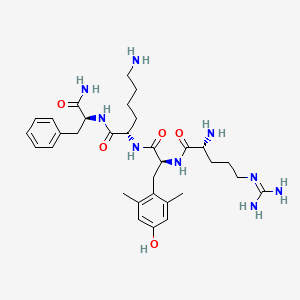
Sequence:
D-Arg-Dmt-Lys-Phe-NH₂
(Dmt = 2′,6′-dimethyltyrosine)
Molecular Formula: C₃₂H₄₉N₉O₅
Molecular Weight: 639.8 Da
CAS Number: 736992-21-5
References
- Szeto HH, Schiller PW. Novel therapies targeting inner mitochondrial membrane—from discovery to clinical development of elamipretide. Pharm Res. 2011;28(11):2669-2679. doi:10.1007/s11095-011-0509-7
- Birk AV, Liu S, Soong Y, et al. The mitochondrial-targeted compound SS-31 interacts with cardiolipin and preserves mitochondrial structure and function. J Am Soc Nephrol. 2013;24(8):1250-1261. doi:10.1681/ASN.2012121216
- Brown DA, Hale SL, Baines CP, et al. Reduction of mitochondrial ROS production by SS-31 improves mitochondrial function. J Mol Cell Cardiol. 2014;67:42-52.
- Zhao K, Zhao GM, Wu D, et al. Cell-permeable peptide antioxidants targeted to inner mitochondrial membrane inhibit mitochondrial swelling and cell death. J Biol Chem. 2004;279(33):34682-34690.
- Siegel MP, Kruse SE, Percival JM, et al. Mitochondrial-targeted peptide improves skeletal muscle mitochondrial bioenergetics in aged muscle. Aging Cell. 2013;12(5):763-771.
- Dai DF, Chen T, Johnson SC, et al. Mitochondrial targeted antioxidant peptide ameliorates cardiac mitochondrial dysfunction and prevents ischemia-reperfusion injury. Circ Res. 2011;108(5):529-540.
- López-Otín C, Blasco MA, Partridge L, et al. The hallmarks of aging. Cell. 2013;153(6):1194-1217.