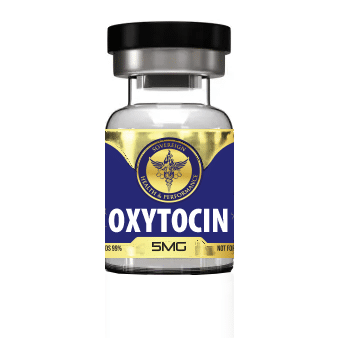

Oxytocin — Research Overview
Oxytocin is a peptide hormone and neuropeptide synthesized primarily in the hypothalamus and extensively studied for its roles in reproductive physiology, social behavior, and neuroendocrine signaling.¹ The information below summarizes findings from published scientific literature investigating oxytocin signaling pathways.
Initially characterized for its role in uterine contraction and lactation, oxytocin has since been recognized as a multifunctional signaling molecule acting in both peripheral endocrine systems and the central nervous system.²
Oxytocin binds to its cognate G protein-coupled receptor, the oxytocin receptor (OXTR), which is expressed in peripheral tissues—including the uterus and mammary glands—as well as in multiple brain regions.³ Activation of this pathway has been shown in experimental studies to influence smooth muscle contraction, social and affiliative behaviors, stress responses, and emotional processing.
Unlike upstream neuroendocrine regulators such as kisspeptin, oxytocin functions both as a circulating hormone and as a centrally acting neuromodulator, directly influencing physiological responses and behavior.
Research literature frequently describes oxytocin signaling as a key mediator of reproductive physiology, social bonding, and stress regulation.
Executive Summary
Oxytocin is a neuropeptide involved in both endocrine and central nervous system signaling.
Published research has examined its role in:
- Regulation of uterine contraction and parturition²
- Milk ejection (let-down reflex) during lactation¹
- Social bonding and affiliative behavior⁴
- Modulation of stress and anxiety responses⁵
- Emotional and social cognitive processing⁶
- Cardiovascular and inflammatory signaling pathways⁷
Oxytocin functions as an OXTR receptor agonist, and research into this signaling pathway focuses on neuroendocrine integration, behavioral modulation, and peripheral physiological effects.
Key Actions
Uterine Contraction and Parturition
Oxytocin is a primary regulator of uterine smooth muscle contraction during labor. Binding to OXTR on myometrial cells activates intracellular signaling pathways that increase calcium availability, promoting coordinated contractions necessary for parturition.²
This process operates through a positive feedback mechanism in which cervical stretch stimulates further oxytocin release.
Lactation and Milk Ejection
Oxytocin mediates the milk ejection reflex by acting on myoepithelial cells in the mammary glands.¹
Sensory input—such as infant suckling—stimulates hypothalamic oxytocin release, leading to contraction of these cells and subsequent milk expulsion.
Social Bonding and Affiliative Behavior
Oxytocin signaling in the central nervous system has been widely studied for its role in social attachment, pair bonding, and affiliative behaviors.⁴
Experimental models demonstrate that oxytocin receptor distribution in limbic brain regions is associated with species-specific social behaviors, while human studies have examined its influence on trust, empathy, and interpersonal recognition.
Stress and Anxiety Modulation
Oxytocin interacts with the hypothalamic-pituitary-adrenal (HPA) axis and has been shown in experimental settings to modulate stress responses.⁵
Research indicates that oxytocin signaling may attenuate cortisol release and influence autonomic regulation under certain conditions.
Emotional and Cognitive Processing
Oxytocin receptors are expressed in brain regions including the amygdala, hippocampus, and prefrontal cortex.⁶
Neuroimaging and behavioral studies have investigated how oxytocin influences emotional perception, social cue processing, and responses to fear-related stimuli.
🧬 What Is Oxytocin?
Oxytocin is a nonapeptide (nine–amino acid peptide) synthesized as part of a larger precursor protein that includes neurophysin I.¹
It is produced in the paraventricular and supraoptic nuclei of the hypothalamus and transported to the posterior pituitary for release into systemic circulation.
Structure:
Cys–Tyr–Ile–Gln–Asn–Cys–Pro–Leu–Gly–NH₂
The peptide contains a disulfide bond between cysteine residues, forming a cyclic structure essential for receptor binding and biological activity.
Core Research Areas
🍼 Reproductive Physiology Research
Oxytocin has been extensively studied in the context of uterine contractility, labor induction, and postpartum physiology.²
Research continues to examine receptor dynamics, signaling mechanisms, and interactions with other endocrine pathways involved in parturition.
🧠 Social Neuroscience Research
Oxytocin is a central focus in social neuroscience, with studies exploring its role in social cognition, bonding, and interpersonal behavior.⁴
Experimental administration paradigms have been used to investigate its effects on trust, emotional recognition, and group dynamics.
😌 Stress and Behavioral Research
Research has examined oxytocin’s role in modulating stress, anxiety, and adaptive behavioral responses.⁵
This includes investigation into its interactions with glucocorticoid signaling and autonomic regulation.
❤️ Cardiovascular and Inflammatory Research
Oxytocin receptors are expressed in cardiovascular tissues, and experimental studies have explored its role in vascular function, inflammation, and cardiometabolic processes.⁷
The physiological and clinical implications of these findings remain under active investigation.
🧪 Mechanistic Insights
Activation of OXTR, a G protein-coupled receptor, primarily signals through the Gq/11 pathway.
Experimental research indicates that oxytocin signaling can:
- Activate phospholipase C
- Increase intracellular calcium levels
- Promote smooth muscle contraction
- Modulate neuronal excitability
Within the central nervous system, oxytocin also acts as a neuromodulator, influencing synaptic transmission and network activity in circuits associated with emotion and social behavior.
Oxytocin-producing neurons project broadly throughout the brain, supporting coordinated regulation of physiological and behavioral processes.
Molecular Details
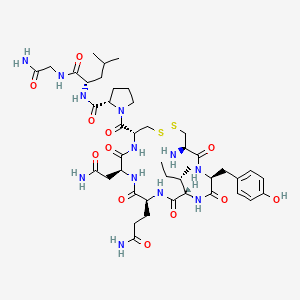
Sequence:
Cys–Tyr–Ile–Gln–Asn–Cys–Pro–Leu–Gly–NH₂
Molecular Formula:
C₄₃H₆₆N₁₂O₁₂S₂
Molecular Weight:
1007.19 Da
CAS Number:
50-56-6
References
- Gimpl G, Fahrenholz F. The oxytocin receptor system: structure, function, and regulation. Physiol Rev. 2001;81(2):629–683. doi:10.1152/physrev.2001.81.2.629
- Blanks AM, Thornton S. The role of oxytocin in parturition. BJOG. 2003;110 Suppl 20:46–51. doi:10.1046/j.1471-0528.2003.00024.x
- Kimura T, Tanizawa O, Mori K, et al. Structure and expression of a human oxytocin receptor. Nature. 1992;356(6369):526–529. doi:10.1038/356526a0
- Insel TR. The challenge of translation in social neuroscience: a review of oxytocin, vasopressin, and affiliative behavior. Neuron. 2010;65(6):768–779. doi:10.1016/j.neuron.2010.03.005
- Neumann ID, Landgraf R. Balance of brain oxytocin and vasopressin: implications for anxiety, depression, and social behaviors. Trends Neurosci. 2012;35(11):649–659. doi:10.1016/j.tins.2012.08.004
- Domes G, Heinrichs M, Michel A, Berger C, Herpertz SC. Oxytocin improves “mind-reading” in humans. Biol Psychiatry. 2007;61(6):731–733. doi:10.1016/j.biopsych.2006.07.015
- Szeto A, Nation DA, Mendez AJ, et al. Oxytocin attenuates NADPH-dependent superoxide activity and IL-6 secretion in macrophages and vascular cells. Am J Physiol Endocrinol Metab. 2008;295(6):E1495–E1501. doi:10.1152/ajpendo.90718.2008