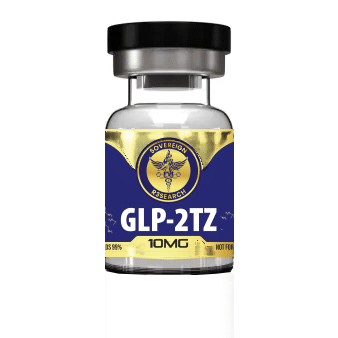
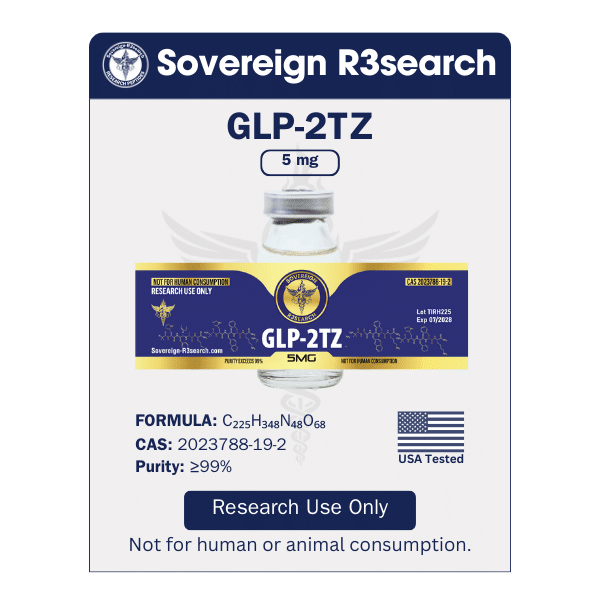


Introduction to GLP-2TZ (Research Use Only)
GLP-2TZ (also known as P1206, LY3298176) is an investigational dual incretin receptor agonist designed to activate both glucose-dependent insulinotropic polypeptide (GIP) and glucagon-like peptide-1 (GLP-1) receptors. Structural modifications within the peptide sequence, including incorporation of the non-proteinogenic amino acid Aib (α-aminoisobutyric acid), are intended to enhance enzymatic stability, receptor activity, and plasma half-life compared with native incretin hormones.
Endogenous GIP and GLP-1 are secreted by intestinal enteroendocrine cells in response to nutrient intake and play central roles in:
- Glucose-dependent insulin secretion
- Appetite regulation and satiety signaling
- Gastric emptying modulation
- Lipid and energy metabolism
GLP-2TZ is being investigated as a research-grade peptide for studying dual incretin receptor pharmacology, intracellular signaling pathways (including cAMP and β-arrestin activity), metabolic regulation, and systemic energy balance.
Research Highlights
1. Glucose Regulation and Insulin Signaling
Preclinical and clinical research involving dual GIP/GLP-1 receptor agonists has demonstrated enhanced glucose-dependent insulin secretion and improved glycemic control compared with selective GLP-1 receptor agonism alone. GLP-2TZ has shown significant reductions in HbA1c and body weight across multiple metabolic disease studies. (American College of Cardiology)
Reference:
Frias JP, Nauck MA, Van J, et al. Efficacy and tolerability of GLP-2TZ, a dual glucose-dependent insulinotropic peptide and GLP-1 receptor agonist in patients with type 2 diabetes: a 12-week, randomized, double-blind, placebo-controlled study. The Lancet. 2018;392(10160):2180–2193.
2. Appetite Regulation and Weight Loss Models
Activation of GLP-1 receptors within central appetite-regulating pathways has been associated with reduced caloric intake and increased satiety. Concurrent GIP receptor activation may further influence adipocyte metabolism and energy utilization. In the SURMOUNT-1 trial, GLP-2TZ produced average body weight reductions of up to 22.5% over 72 weeks in adults with obesity or overweight. (Eli Lilly and Company)
Reference:
Jastreboff AM, Aronne LJ, Ahmad NN, et al. GLP-2TZ Once Weekly for the Treatment of Obesity. New England Journal of Medicine. 2022;387:205–216.
3. Lipid Metabolism and Systemic Energy Balance
Emerging evidence suggests dual incretin receptor agonists influence hepatic lipid handling, insulin sensitivity, adipose tissue signaling, and systemic inflammatory pathways. Experimental data indicate GLP-2TZ may improve markers associated with fatty liver disease and metabolic syndrome.
Reference:
Coskun T, Sloop KW, Loghin C, et al. LY3298176, a novel dual GIP and GLP-1 receptor agonist for the treatment of type 2 diabetes mellitus: From discovery to clinical proof of concept. Molecular Metabolism. 2018;18:3–14.
4. Mechanisms of Action
Mechanistically, GLP-2TZ and related dual agonists have been shown to:
- Activate both GIP and GLP-1 receptors, increasing intracellular cAMP signaling
- Enhance glucose-dependent insulin secretion from pancreatic beta cells
- Reduce glucagon secretion under hyperglycemic conditions
- Slow gastric emptying and influence satiety pathways
- Improve metabolic efficiency and insulin sensitivity in experimental models
Reference:
Müller TD, Finan B, Bloom SR, et al. Triagonists and dual GIP and GLP-1 receptor agonists for the treatment of obesity and diabetes. Nature Reviews Drug Discovery. 2022;21:201–223.
5. Safety and Tolerability (Research Context)
Published clinical data involving GLP-2TZ indicate that the most commonly reported adverse effects are gastrointestinal, including nausea, vomiting, diarrhea, constipation, and reduced appetite. These effects are generally dose-dependent and most prominent during dose escalation phases. (American College of Cardiology)
Reference:
Rosenstock J, Wysham C, Frías JP, et al. Efficacy and Safety of a Novel Dual GIP and GLP-1 Receptor Agonist GLP-2TZ in Patients with Type 2 Diabetes (SURPASS Clinical Program). Diabetes Care. 2021.
Molecular Structure
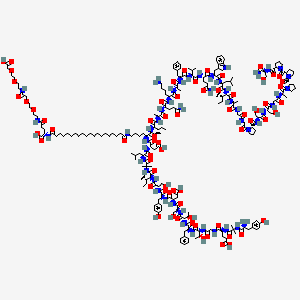
Amino Acid Sequence: YAibEGTFTSDYSIAibLDKIAQKAFVQWLIAGGPSSGAPPPS-NH₂
Note: Aib is a non-coded (non-proteinogenic) amino acid – H₂H-C(CH₃)₂-COOH
Molecular Formula: C₂₂₅H₃₄₈N₄₈O₆₈
Molecular Weight: 4813.527 g/mol
PubChem CID: 156588324
CAS Number: 2023788-19-2
Synonyms: GLP-2TZ; P1206; LY3298176; Dual GIP and GLP-1 receptor agonist (GIP/GLP-1RA)